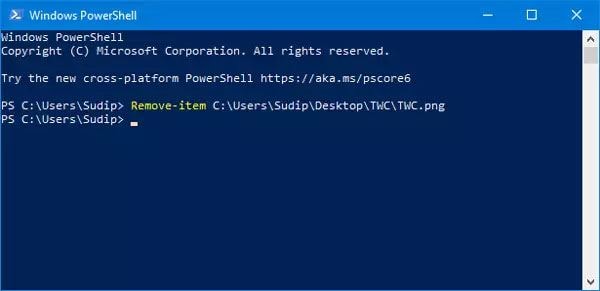
How do I permanently delete files in PowerShell?
To delete files older than a specific date, you can use the “Get-ChildItem” cmdlet to list all the files in the target directory, filter them with “Where-Object” based on their last write time, and then use “Remove-Item” to delete those files. This command will permanently delete files.
How to check OS via PowerShell?
Using Command Prompt or PowerShell
- At the PowerShell or Command Prompt, type systeminfo | findstr /B /C:"OS Name" /B /C:"OS Version" and then press ENTER.
- At the PowerShell or Command Prompt, type slmgr /dlv , and then press ENTER. The /dlv command displays the detailed licensing information.
How to change language via PowerShell?
Method 3: Using PowerShell
- Open PowerShell as Administrator.
- Use the cmdlet Set-WinSystemLocale -SystemLocale <LocaleName> and press Enter.
- Restart your computer to apply the changes.
How to Remove PowerShell startup message?
All you have to do is include the -nologo argument before powershell.exe in the execution file.
- Go to Windows Terminal Settings. Navigate to the dropdown icon in Windows Terminal, then access the settings to customize its behavior.
- Search for powershell.exe. …
- Add -nologo Argument. …
- Save Settings and Restart Terminal.
Командлет Remove-Item удаляет один или несколько элементов. Так как она поддерживается многими поставщиками, она может удалять различные типы элементов, включая …
Откройте PowerShell, нажав кнопку Пуск и введя PowerShell. Нажмите Enter. · Введите Remove-Item –path c:\testfolder –recurse и нажмите Enter.
The Remove-Item cmdlet deletes one or more items. Because it’s supported by many providers, it can delete many different types of items, including files, …